Here is a comprehensive, SEO-optimized, and original article designed to be high-value for readers and compliant with AdSense guidelines. 15 Colorful Chinese New Year Printables for Kids: Decor, Games, and Activities Isn’t it wonderful that we get a second chance to celebrate the New Year just a month after January 1st? While the confetti from New Year's Eve has long been swept away, another vibrant, culturally rich celebration is just around the corner. We are talking, of course, about Chinese New Year (also known as the Lunar New Year or Spring Festival). The Chinese base their New Year on the lunar calendar, which tracks the cycles of the moon. This holiday usually falls in late January or early February and signifies the end of the frozen winter and the welcoming of warmer spring weather. It is a time of family reunions, delicious feasts, and waves of red and gold. But beyond the dumplings and the decorations, there is a fascinating history and deep symbolism behind this holiday. If you are looking for ways to engage your children or students in this global celebration, you have come to the right place. We have curated a list of ideas for 15 Colorful Chinese New Year Printables that cover everything from decorations to educational games. The Legend of Nian: Why We Paint the Town Red Before you start printing out activities, it is wonderful to share the "why" behind the holiday with your kids. The story of Chinese New Year is more than just a calendar change; it is an ancient legend of survival and cleverness. According to folklore, there was once a terrifying beast named Nian (which sounds like the Chinese word for "year"). Nian lived deep in the sea or high in the mountains but would come down to the village on the eve of the new year to devour livestock, crops, and even children. The villagers lived in fear until an old, wise man visited the village. While everyone else was fleeing to the mountains to hide, the old man stayed behind. He knew a secret: Nian was powerful, but he had weaknesses. The beast was terrified of three things: loud noises, bright lights, and the color red. When Nian arrived, the old man set off firecrackers, banged loudly on drums, and covered the doors in bright red paper. The beast fled in terror! When the villagers returned the next morning to find their homes intact, they realized the secret to keeping the monster away. This is why, to this day, Chinese New Year is a festival of red decorations (to scare the beast), firecrackers (to startle him), and drumming. It is a celebration of triumph and protection. Understanding the Chinese Zodiac Another key element of the Lunar New Year is the Chinese Zodiac. Unlike Western astrology, which changes monthly, the Chinese Zodiac changes annually. It features a cycle of 12 animals, each with its own personality traits and fortune. The order of the animals is: Rat (Wisdom) Ox (Diligence) Tiger (Valor) Rabbit (Cautiousness) Dragon (Strength) Snake (Flexibility) Horse (Forging ahead) Goat (Unity) Monkey (Changeability) Rooster (Constancy) Dog (Fidelity) Pig (Amiability) Children love finding out which animal represents their birth year! It makes the holiday personal and fun. 15 Magnificent Chinese New Year Printables Ready to celebrate? These printable ideas are perfect for classrooms, homeschool lessons, or a rainy afternoon at home. They help build fine motor skills, cultural awareness, and artistic creativity. 1. The Interactive Zodiac Wheel This is a fan favorite. A printable Zodiac wheel consists of two circles attached by a paper fastener (brad) in the center. The top circle has a "window" cut out. As kids spin the wheel, it reveals the animal and the years associated with it. Educational Value: Helps children understand the cyclical nature of the lunar calendar and identify their own sign and the signs of their family members. 2. DIY Red Envelopes (Hongbao) Templates In Chinese culture, adults give red envelopes filled with money to children to pass on good fortune and blessings. The Activity: Print out templates of flat envelopes that kids can cut, fold, and glue. Creative Twist: Instead of real money, have kids write notes of kindness or "coupons" for chores (like "Good for one free hug" or "I will do the dishes") to put inside and give to parents. 3. Articulated Paper Dragon Puppet The Dragon Dance is the highlight of many street parades. Dragons represent power, strength, and good luck. The Craft: This printable features the dragon's head, tail, and several body segments. Children color the segments, cut them out, and connect them using paper fasteners so the dragon can wiggle and move. Glue stick handles to the back for a fun puppet show! 4. "Nian" the Monster Masks Bring the legend to life! The Activity: Printable masks depicting the scary (but colorful) Nian monster or the benevolent Lion used in dances. Play: After decorating with markers, sequins, and glitter, kids can act out the story of the old man scaring away the beast. 5. Chinese Lantern Cut-Outs The festivities traditionally end with the Lantern Festival. The Craft: Print out rectangular sheets with traditional patterns (cherry blossoms, gold coins). Kids fold the paper in half, cut slits along the fold, and open it up to create the classic lantern shape. Decor: String these together to create a festive garland for the living room. 6. Lunar New Year Word Search Perfect for quiet time or vocabulary building. The Challenge: A grid of letters hiding words like Dumpling, Firecracker, Red, Lantern, Fortune, Coin, Bamboo, and Spring. Educational Value: improves spelling and pattern recognition while introducing holiday-specific terminology. 7. Tangram Puzzle Challenge Tangrams are ancient Chinese dissection puzzles consisting of seven flat shapes, called tans, which are put together to form shapes. The Printable: A sheet with the seven shapes to cut out, along with silhouette challenges (try to make a rabbit, a boat, or a person). Benefit: Excellent for teaching geometry, spatial awareness, and problem-solving. 8. I-Spy: Festival Edition A great visual discrimination game for younger children. The Game: A cluttered page full of New Year items (oranges, fans, coins, dragons). The child has to count how many of each item they can find. Math Connection: "Find 5 dragons and 3 lanterns. How many items is that in total?" 9. Lucky Fortune Cookie Notes While fortune cookies are more of an American-Chinese invention, they are still super fun! The Activity: Printable strips of paper with positive affirmations or blank spaces for kids to write their own fortunes. Paper Craft: You can make paper fortune cookies out of circles of construction paper and tuck these printable notes inside. 10. Cherry Blossom Finger Painting Tree Cherry blossoms symbolize spring and renewal. The Printable: A bare tree branch outline. The Art: Kids dip their fingers in pink paint and stamp "blossoms" all over the branches. It’s messy, sensory fun that results in beautiful refrigerator art. 11. Chinese Character Tracing Sheets Introduce children to the beauty of calligraphy. The Activity: Worksheets featuring simple characters like Fu (Good Luck), Chun (Spring), and the numbers 1-10. Skill: Shows children that writing can be an art form and introduces the concept of stroke order. 12. "Design Your Own Fan" Template Round fans or folded fans have a long history in Asian art. The Craft: A semi-circle template that mimics a folded fan. Creativity: Encourage kids to draw scenes from nature—mountains, rivers, or birds—which are common themes in traditional Chinese paintings. 13. Chopstick Wrapper Origami If you are having a celebratory meal, personalized table settings are a must. The Printable: patterned strips of paper with instructions on how to fold them into sleeves for chopsticks. Cultural Lesson: This is a great time to teach proper chopstick etiquette (like never sticking them upright in rice!). 14. Gold Coin Counting Mats A math activity for preschoolers. The Printable: Numbered pots of gold or red bags. The Task: Children use plastic gold coins or yellow playdough balls to place the correct number of "coins" onto the corresponding mat. 15. Door Couplets (Chunlian) It is traditional to paste red paper with black calligraphy on doors. The Activity: Long vertical red rectangles. The Art: Kids can practice writing "Happy New Year" or draw vertical designs of flowers and fireworks to tape to their bedroom door frames, inviting good luck in. Conclusion: Bringing the Celebration Home Celebrating Chinese New Year is a wonderful way to broaden a child's worldview. It teaches them that while we may live in different places, the desire for health, happiness, and family togetherness is universal. These 15 Chinese New Year printables offer a low-cost, high-engagement way to immerse your family in the festivities. Whether you are scared of the Nian monster or just excited to find out you were born in the Year of the Dragon, there is something here for everyone

10 Gleeful Groundhog Day Crafts for Kids: Celebrating Punxsutawney Phil

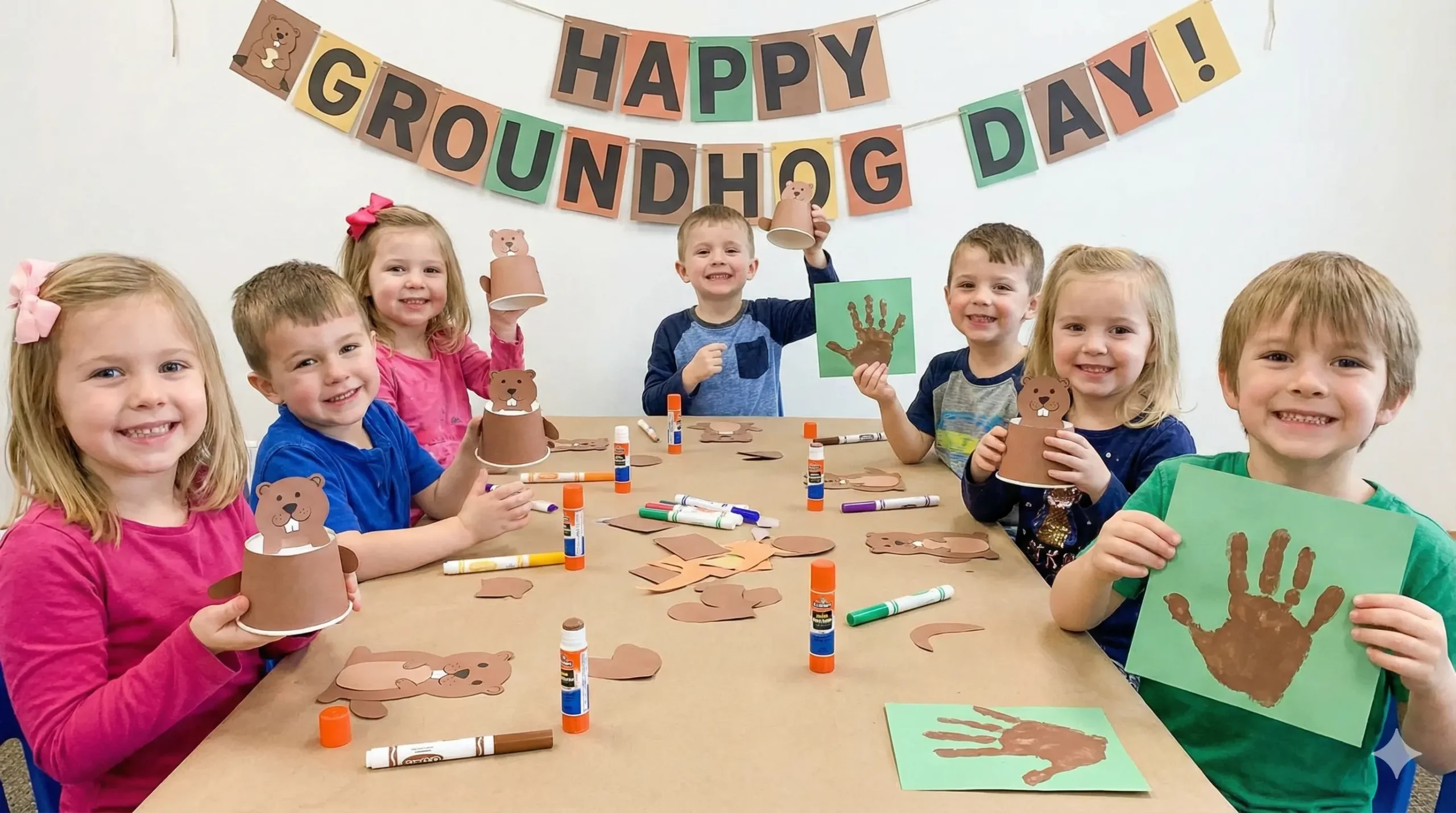
With Groundhog Day coming up on February 2nd, the excitement is building! Will we have six more weeks of winter, or is spring just around the corner? It is the perfect time to celebrate our favorite weather-predicting rodent, Punxsutawney Phil, with these 10 gleeful Groundhog Day crafts for kids.

We’ve often heard of animals whose actions are associated with specific weather conditions—like the wolf who howls before a storm or the frog who sings when it rains. However, there is only one animal famous enough to have his own holiday based on his shadow. Whether you are a teacher looking for classroom activities or a parent hoping to keep the little ones busy on a chilly afternoon, these crafts are designed to be fun, educational, and budget-friendly.

In this guide, we will explore the fascinating history of this quirky tradition and dive into ten amazing DIY projects that celebrate shadows, burrows, and the changing seasons.

The Story Behind Groundhog Day

Before we get the glue sticks and construction paper out, it is important to understand what we are celebrating. Kids love a good story, and the legend of Groundhog Day is one of the best.

The tradition centers around a groundhog named Phil, who lives in Punxsutawney, Pennsylvania. The legend says that Phil wakes up from his long winter hibernation and peeks out of his burrow on February 2nd. The suspense lies in what happens next:

  • If Phil sees his shadow: He gets scared and runs back inside. This predicts six more weeks of winter.
  • If Phil does not see his shadow: He stays outside to play. This predicts that spring is coming early!

Where Did This Tradition Come From?

Groundhog Day is widely celebrated in the United States and Canada, but its roots go back to Europe. It is believed to have been brought over by German settlers in Pennsylvania during the 18th and 19th centuries.

Originally, in Germany, they didn’t use a groundhog—they used a badger! When the settlers arrived in America, they couldn’t find many badgers, but they found plenty of groundhogs (also known as woodchucks). Thus, the groundhog became the star of the show.

Today, the celebration in Punxsutawney is massive. It is estimated that as many as 40,000 people gather to watch Phil emerge—that is eight times the population of the actual town! It is a fun way to break up the monotony of winter and look forward to warmer days.

Now, let’s bring that excitement into your home with these creative crafts.

10 Fun and Easy Groundhog Day Crafts

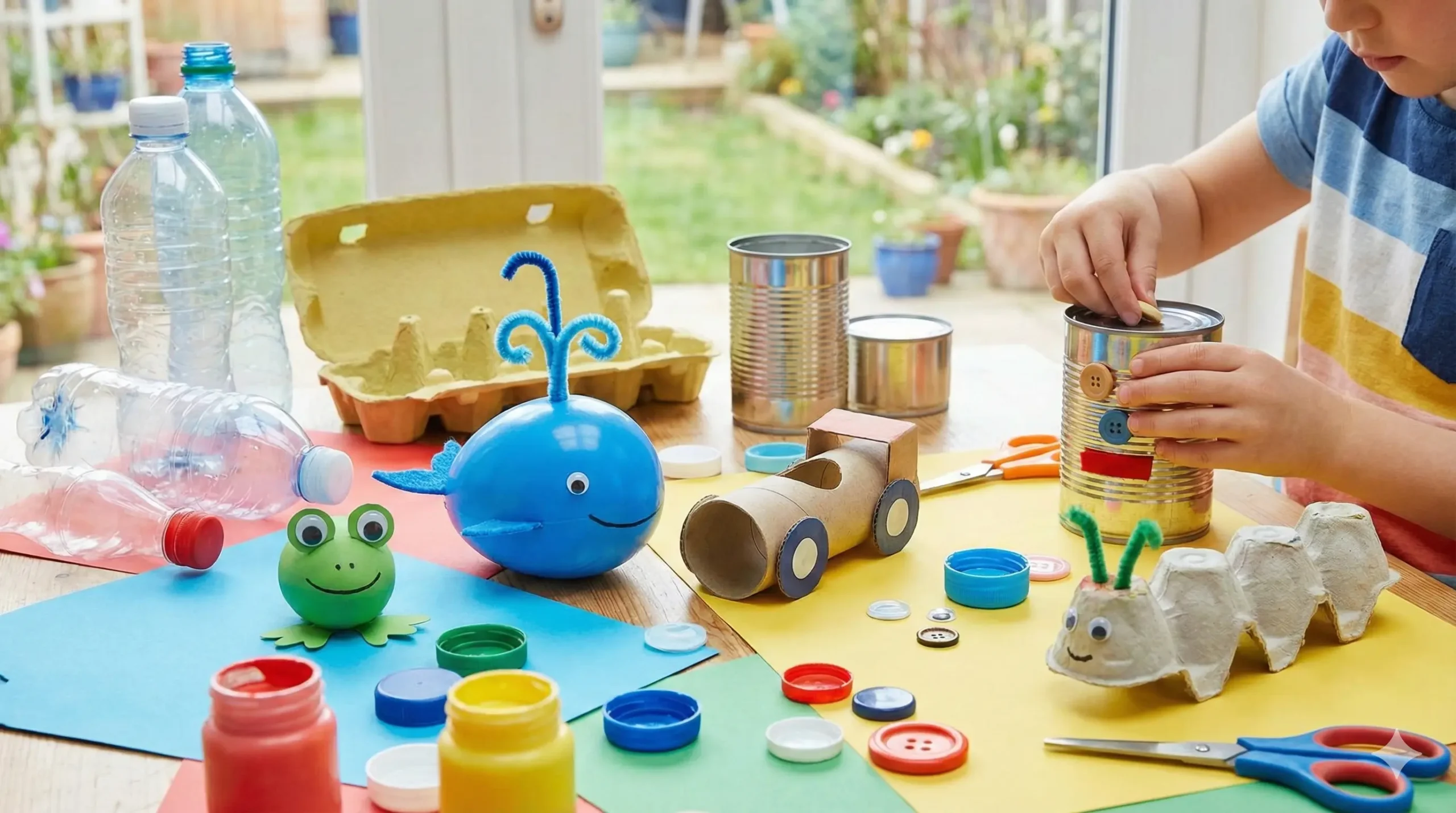
These crafts are designed to help children develop fine motor skills while learning about shadows, hibernation, and the seasons. Most of these can be made with items you already have in your recycling bin or craft drawer.

1. The Classic Pop-Up Cup Groundhog

This is the quintessential Groundhog Day craft. It acts as an interactive toy that mimics the groundhog popping out of his burrow.

  • What You Need: A paper cup (green or brown), a craft stick (popsicle stick), brown construction paper, glue, and markers.
  • How to Make It:
    1. Decorate the paper cup to look like a grassy hill. You can paint it green or glue green paper fringe around the rim to look like grass.
    2. Cut a simple groundhog shape out of brown paper (an oval for the body and a circle for the head). Add ears, eyes, and buck teeth.
    3. Glue the groundhog to the top of the craft stick.
    4. Cut a slit in the bottom of the paper cup.
    5. Slide the stick through the slit so the groundhog is inside the cup.
    6. Play: Push the stick up to make Phil pop out, and pull it down to make him hibernate!

2. Handprint Groundhog Keepsake

Handprint crafts are perfect for toddlers and preschoolers because they double as a memory of how small their hands once were.

  • What You Need: Brown paint, white paper, a black marker, and googly eyes.
  • How to Make It:
    1. Paint your child’s palm and fingers brown, but leave the thumb clean (or paint it brown if you want a tail).
    2. Press the hand onto the white paper.
    3. Once dry, turn the paper upside down. The fingers become the groundhog’s legs, and the heel of the hand is the head.
    4. Draw ears on the top (the heel) and add a cute face with buck teeth.
    5. Paint a little patch of green grass under his feet.

3. “Shadow or No Shadow?” Paper Plate Craft

This craft teaches the concept of the holiday: the relationship between the sun and the shadow.

  • What You Need: A paper plate, black paint, yellow paint, and a brad (paper fastener).
  • How to Make It:
    1. Paint half of the paper plate yellow (for sunshine/spring) and the other half grey or light blue (for cloudy/winter).
    2. Cut an arrow shape out of black cardstock.
    3. Attach the arrow to the center of the plate using the brad so it can spin.
    4. Label the yellow side “No Shadow – Spring!” and the grey side “Shadow – Winter!”
    5. On February 2nd, your child can spin the arrow to match Phil’s prediction.

4. Toilet Roll Groundhog

Never throw away empty toilet paper rolls! They are the building blocks of the best kids’ crafts.

  • What You Need: Toilet paper roll, brown paint or paper, black pipe cleaners (for whiskers), and pom-poms.
  • How to Make It:
    1. Wrap the roll in brown paper or paint it.
    2. Cut out two small paws and glue them to the front.
    3. Glue a small black pom-pom for the nose and add pipe cleaner whiskers.
    4. The Twist: Create a “shadow” for your groundhog by cutting a silhouette shape out of black paper and gluing it to the base of the roll, stretching out to the side.

5. Groundhog Mask for Pretend Play

Let the kids become the groundhog. This is great for dramatic play or a classroom skit.

  • What You Need: A sturdy paper plate, brown paint, a large craft stick, and elastic string.
  • How to Make It:
    1. Cut the center out of a paper plate, leaving a rim, or simply cut eye holes in a whole plate.
    2. Paint it brown.
    3. Cut large rounded ears from brown paper and glue them to the top.
    4. Cut a large rectangle of white paper, draw a line down the middle, and glue it below the mouth area for the signature big teeth.
    5. Attach a stick to hold it up, or use a string to wear it as a mask.

6. Felt Burrow Finger Puppets

This requires a little more dexterity but results in a toy that lasts a long time.

  • What You Need: Brown and green felt sheets, fabric glue (or needle and thread).
  • How to Make It:
    1. Cut a semi-circle of green felt and glue the edges to create a small pocket (the burrow).
    2. Cut a small finger-shaped piece of brown felt. Decorate it with a tiny face to be the groundhog.
    3. The child can put the groundhog on their finger and hide him inside the green felt pocket burrow.

7. Shadow Tracing Art

This is a science activity masquerading as a craft. It works best on a sunny day.

  • What You Need: Plastic toy animals (or your toilet roll groundhog from Craft #4), white paper, and crayons.
  • How to Make It:
    1. Take the toys and paper outside on a sunny morning.
    2. Place the toy on the edge of the paper so it casts a shadow across the sheet.
    3. Have your child trace the outline of the shadow with a crayon.
    4. This visually demonstrates how shadows are formed and why Phil might get scared of his own!

8. The “Wake Up Phil!” Noisemaker

Crowds at Punxsutawney often cheer and make noise to wake up the groundhog. Let’s make our own noisemakers.

  • What You Need: An empty water bottle, dried beans or rice, and decorating supplies.
  • How to Make It:
    1. Clean and dry the water bottle.
    2. Fill it about 1/4 full with beans or rice.
    3. Super glue the cap shut (safety first!).
    4. Decorate the outside with stickers of suns and snowflakes to represent the two possibilities.
    5. Shake it loud on Groundhog Day morning!

9. Paper Bag Groundhog Puppet

Puppets are excellent for storytelling and language development.

  • What You Need: A brown paper lunch bag, construction paper, and glue.
  • How to Make It:
    1. Keep the bag folded flat. The bottom flap will be the head.
    2. Glue a face onto the flap (eyes, nose, teeth).
    3. Lift the flap and glue a red tongue underneath, so you can see it when he “speaks.”
    4. Glue paws onto the main body of the bag.
    5. Kids can put their hand inside and make Phil give his weather prediction speech.

10. Spring vs. Winter Sensory Bin

While not a “construction” craft, this sensory activity is “crafted” for exploration.

  • What You Need: A large plastic bin, cotton balls (snow), green shredded paper (grass), and a small toy groundhog.
  • How to Do It:
    1. Divide the bin in half.
    2. Fill one side with cotton balls to represent the 6 more weeks of winter.
    3. Fill the other side with green paper and maybe some fake flowers to represent early spring.
    4. Let the child move the groundhog back and forth, discussing the differences between the textures of winter and spring.

Why Celebrate Groundhog Day with Crafts?

You might wonder why we should spend time crafting for such a minor holiday. The truth is, Groundhog Day offers a unique educational opportunity.

  1. Understanding Seasons: It helps children visualize the transition from winter to spring. It sparks conversations about hibernation and animal behavior.
  2. Science of Light: It is the perfect introduction to how light creates shadows.
  3. Cultural History: It connects children to folklore and traditions that have been passed down for centuries.

Conclusion

Whether Phil sees his shadow or not, these Groundhog Day crafts guarantee a fun-filled day for your little ones. It is a chance to break the routine of winter, get creative, and share a few laughs over a very silly, very lovable tradition.

Leave a Reply

Your email address will not be published. Required fields are marked *