Continuing on the lines of my earlier post where I shared some simple ideas for keeping a 2-3 year old occupied, I am back with a fresh batch of creative activities! If you are a parent to a toddler, you know that keeping them engaged is a full-time job. Their attention spans are short, their energy is endless, and their curiosity is boundless.
Recently, “Lil P” and I have been experimenting with new textures and materials. We wanted to move beyond just coloring books and explore crafts that help with sensory processing and fine motor skills. The best part? You don’t need expensive supplies. Most of these can be done with items you already have in your kitchen or craft drawer.
Here are some more exciting things we managed to do, and I hope you and your little one like them too!
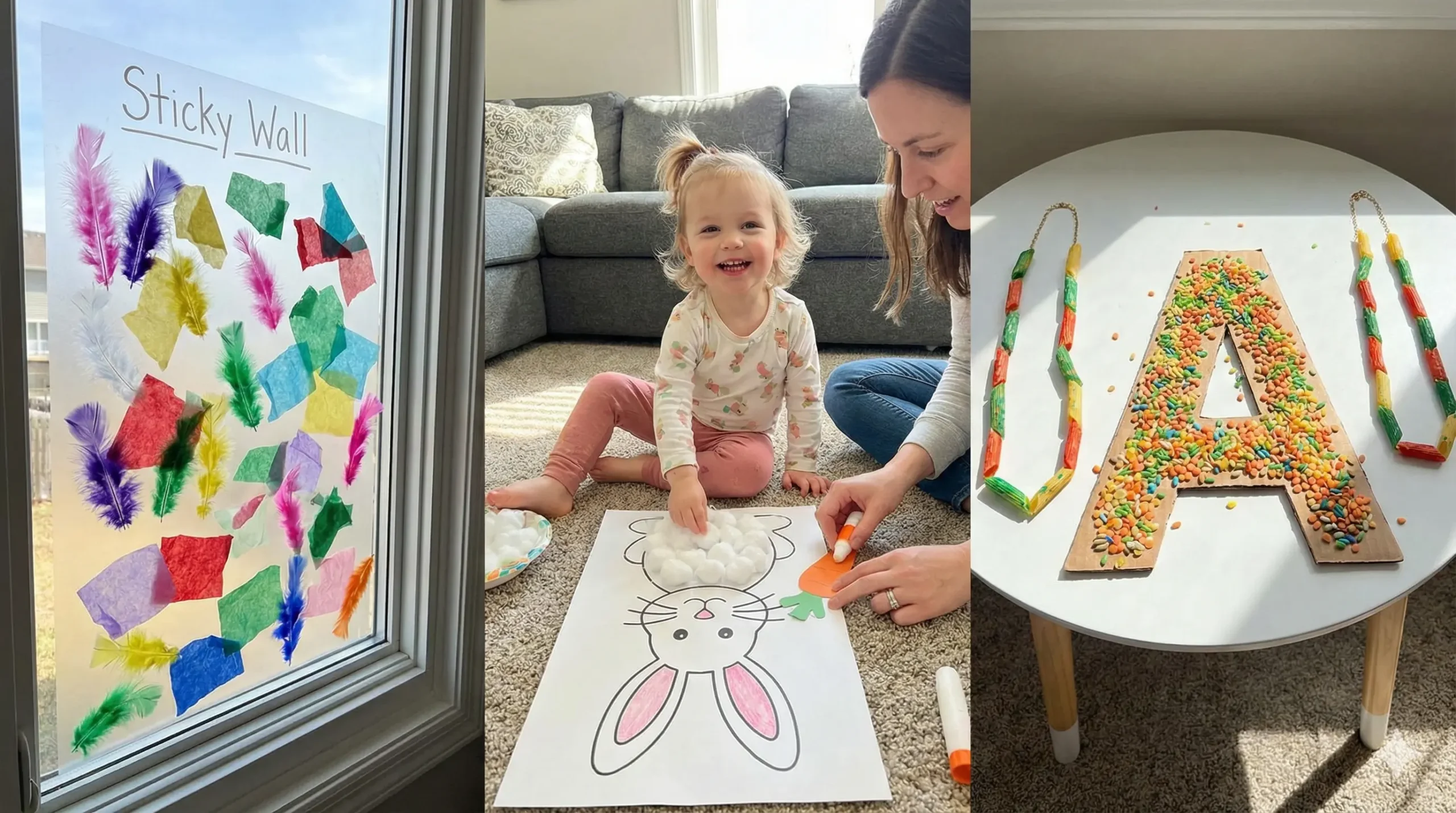
1. The Textured Alphabet: Rice & Dal Pasting
Learning the alphabet doesn’t have to be about boring flashcards. At three years old, children learn best through touch and doing. This craft combines letter recognition with a sensory experience.
Why it works: It introduces the shape of letters while working on the “pincer grasp” (picking up small items), which is crucial for writing later on.
What you need:
- Cardstock or thick paper.
- PVA Glue (white school glue).
- Uncooked Rice, Dal (lentils), or dry beans.
- Food coloring (optional, if you want colored rice).
- A marker.
How to do it:
- Prep the Letters: Draw a large, block-style letter on the paper. Let’s start with the first letter of your child’s name.
- The Sticky Part: Let your toddler help you squeeze the glue inside the lines of the letter. If they struggle with the bottle, pour some glue into a bowl and let them paint it on with a brush.
- The Sensory Part: This is the fun part! Give them a bowl of colored rice or lentils. Ask them to sprinkle or place the grains onto the glue.
- Dry and Display: Let it dry completely. Once dry, let your child run their fingers over the letter to feel the shape.
Tip: To make colored rice, put dry rice in a ziplock bag with a few drops of food coloring and a teaspoon of vinegar. Shake well and let dry!
2. The Hungry Cotton Rabbit
This is a classic “soft” craft that is perfect for Easter, spring, or just a Tuesday afternoon. It focuses on textures and simple shapes.
What you need:
- A bag of cotton balls.
- White and Orange construction paper.
- Glue stick.
- Googly eyes (optional).
- Black crayon or marker.
How to do it:
- The Body: Draw a large outline of a bunny on a piece of paper.
- Fluff it Up: Apply glue all over the body area. Hand your toddler the cotton balls. Show them how to pull the cotton slightly to make it fluffier, then stick it down. Cover the whole bunny!
- The Carrot: Cut a triangle out of orange paper. This is the carrot. Let your child glue it near the bunny’s mouth.
- The Details: Add some green paper scraps for the top of the carrot. Use the crayons to draw whiskers or paste on googly eyes.
Now you have a hungry, fluffy rabbit!
3. Paper Plate Sunflowers
Paper plates are a craft staple. This activity is bright, cheerful, and helps toddlers practice their cutting skills (if they are ready) or just gluing skills.
What you need:
- A paper plate.
- Yellow paint or yellow paper bits.
- Green construction paper.
- Sunflower seeds (real ones!) or coffee beans.
How to do it:
- Paint: Let your child paint the entire paper plate yellow. Toddlers love painting because it covers a large surface area quickly.
- Petals: You can cut the edges of the plate to look like petals, or glue yellow paper strips around the rim.
- The Center: Put a generous amount of glue in the very center of the plate. Let your child stick real sunflower seeds or coffee beans in the middle.
- The Stem: Cut a green strip for a stem and a leaf and attach it to the bottom.
4. The “Sticky Wall” Mural
If you are worried about glue getting on your carpet, the Sticky Wall is a game-changer. It is a vertical surface activity, which is excellent for shoulder stability.
What you need:
- Contact paper (clear adhesive paper).
- Masking tape.
- Lightweight items: Tissue paper squares, feathers, foam shapes, small pieces of yarn.
How to do it:
- Tape a large piece of contact paper to the wall or a window, with the sticky side facing out.
- Set out a basket of lightweight materials.
- Let your toddler stick the items onto the wall to create a collage. The best part is that they can peel them off and rearrange them as many times as they want. It is mess-free and keeps them occupied for ages!
5. Pasta Necklaces (Threading)
Threading is one of the best activities for concentration and hand-eye coordination.
What you need:
- Dry pasta (Penne or Rigatoni work best because they have large holes).
- Paint and brushes (optional).
- Yarn or shoelaces.
How to do it:
- Prep: If you want colorful jewelry, let your child paint the dry pasta first and let it dry.
- Thread: Tie a large knot at one end of a piece of yarn (or use a shoelace with a plastic tip, which is easier for beginners).
- The Activity: Show your child how to push the string through the pasta hole and pull it out the other side.
- Wear it: Tie the ends together and let them wear their new creation!
Why Crafting is Critical for 3-Year-Old
You might think you are just making a mess with glue and paper, but there is some serious brain development happening during these activities.
- Fine Motor Skills: peeling stickers, picking up rice grains, and holding crayons all strengthen the small muscles in the hands and fingers. This creates the foundation for holding a pencil in school.
- Bilateral Coordination: This is the ability to use both sides of the body together. For example, holding the paper with one hand while cutting or gluing with the other.
- Decision Making: “Should the rabbit have blue eyes or green?” “Should the flower be yellow or orange?” These seem like small choices, but for a toddler, they are building confidence and autonomy.
- Language Development: Crafting provides a great opportunity to talk. You can discuss colors, textures (soft cotton, hard rice), and shapes (triangle carrot, round plate).
Tips for Stress-Free Toddler Crafting
Let’s be honest—crafting with a 3-year-old can get messy fast. Here are some tips that helped Lil P and me keep the chaos under control:
- Prep Everything First: Toddlers have zero patience. If you have to stop to find the scissors, you might lose their interest. Have all materials cut and ready in bowls before you call them over.
- Embrace the Imperfection: The rabbit might have three eyes. The alphabet letter might be upside down. That is okay! The goal is the process, not the product. Praise their effort, not just the result.
- Define the Space: Use a plastic tablecloth or an old shower curtain on the floor or table. This makes cleanup as easy as bundling it up and shaking it off outside.
- Keep it Short: A 3-year-old might only craft for 15 minutes. Don’t force them to finish if they lose interest. You can always come back to it later.
Conclusion
Engaging a 3-year-old doesn’t require an iPad or expensive toys. With a little imagination, some kitchen staples like rice and dal, and a few cotton balls, you can create a world of fun. These activities not only keep “Lil P” busy but also create wonderful bonding memories for us.
I hope these ideas inspire you to open up the craft drawer today. Whether you are making a hungry rabbit or a textured alphabet, remember to have fun with it. Happy crafting!