When we think of kids’ crafts, we often focus on the mental benefits: following directions, color recognition, and problem-solving. But did you know that crumpling paper is actually a powerhouse for physical development?
1. Strengthening Fine Motor Muscles
Crumpling requires the small muscles in the hands and fingers to work together. This “heavy work” for little fingers builds the strength needed for later tasks like buttoning a shirt, using a fork, or holding a pencil.
2. Improving Hand-Eye Coordination
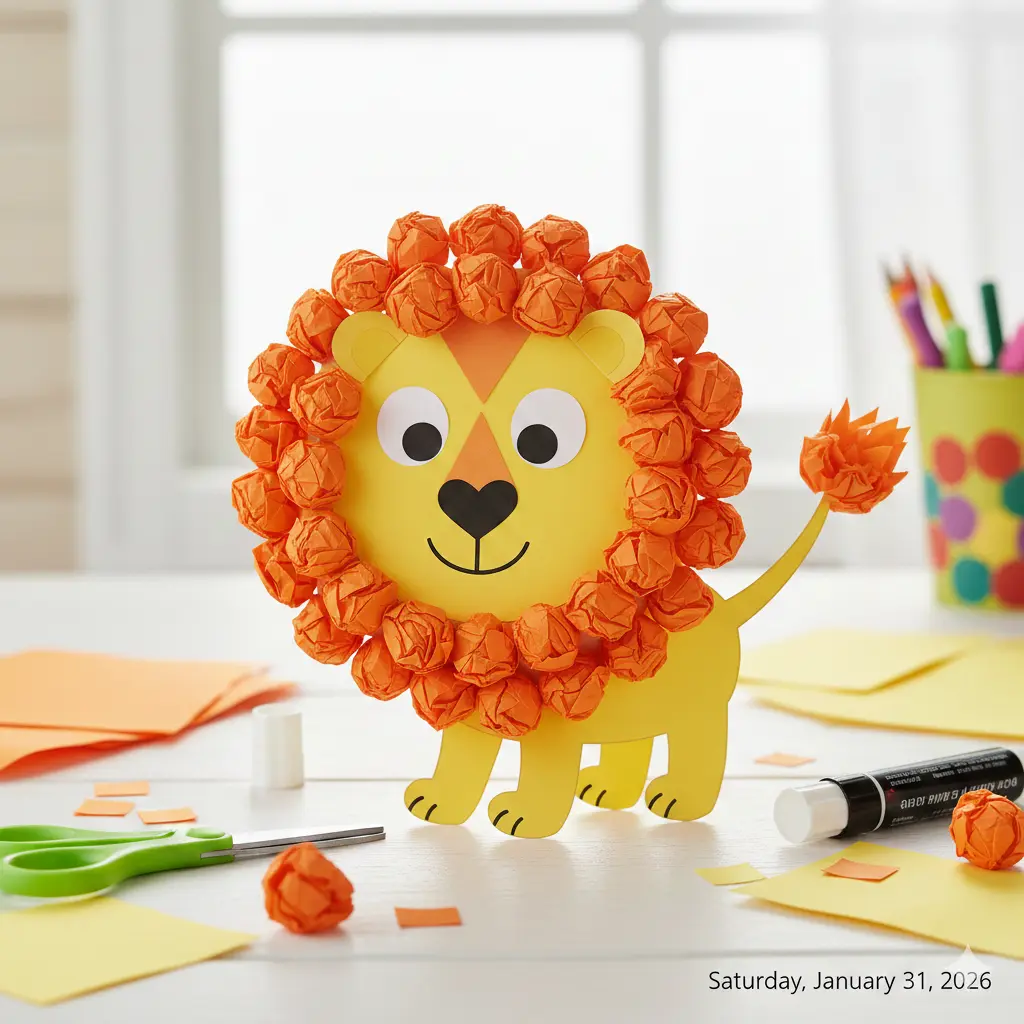
Placing each small, crumpled ball of tissue paper onto a specific spot on the lion’s mane helps children develop precision and coordination.
3. Sensory Feedback
The sound of paper “crunching” and the texture of the balls provide excellent tactile and auditory sensory input, which is vital for sensory processing in early childhood.
Supplies You’ll Need
Before you start, gather these basic craft supplies. You likely already have most of them in your “boredom buster” bin!
- Colored Craft Paper: Yellow (body), Light Orange (forehead), and Dark Orange (mane).
- Tissue Paper: Orange or Yellow (for the crumpled balls).
- The Lion Craft Template: (Head, mane, eyes, forehead, body, tail, and tail tip).
- Glue: A simple glue stick or school glue works best.
- Scissors: Child-safe safety scissors.
- Markers: A black Sharpie for the face and a light orange marker for detail.
- Pencil: For tracing your templates.
Step-by-Step Instructions: How to Make a Crumpled Paper Lion
Step 1: Prepare Your Pieces
Download and print the lion craft template. Trace each part onto the corresponding colored paper:
- Yellow: Head, body, and tail.
- Light Orange: The small forehead triangle.
- Dark Orange: The large mane circle.
- White: Small circles for the eyes.
Carefully cut out all the pieces. If your child is still learning to use scissors, this is a great time to practice “straight line” cuts while you handle the trickier curves.
Step 2: Assemble the Lion’s Face
Start by gluing the yellow head piece onto the center of the dark orange mane. You should see a ring of orange all around the yellow face. Next, take the light orange forehead triangle and stick it near the top of the face. Align the curved edges with the top of the head, ensuring the pointy end faces down toward the center of the lion’s face.
+1
Step 3: Build the Body and Tail
Glue the bushy tail tip onto the end of the long yellow tail. Once that is dry, attach the tail to the lower section of the lion’s body. Finally, apply a bit of glue to the top edge of the body and press the completed head/mane piece onto it. Your lion’s base is now ready!
+1
Step 4: The Fun Part—Crumpling!
This is where the fine motor magic happens. Cut your orange tissue paper into small squares (about 4 cm x 4 cm).
Pro Tip: Let the kids do the crumpling! Show them how to use just their fingertips to roll the tissue paper into tight little balls. This mimics the “pincer grasp” used for writing.
Step 5: Decorate the Mane
Apply a generous amount of glue to the outer ring of the dark orange mane. One by one, have your child press the crumpled tissue paper balls onto the glue. Encourage them to place the balls close together so no paper is showing underneath. This creates a beautiful, 3D “furry” texture that makes the lion look majestic.
Step 6: Final Details and Face
Stick the white eye cutouts onto the head. Use your black marker to draw a cute nose, a smiling mouth, and some whiskers. Finally, use a light orange marker to draw two simple lines on the bottom of the body to represent the lion’s front paws.
Educational Extensions for Parents and Teachers
This craft can easily be turned into a full afternoon of learning. Here are a few ideas:
| Activity | Learning Objective |
| Letter “L” Recognition | Talk about how “Lion” starts with the letter L. Have the child practice drawing L’s in the leftover scrap paper. |
| Jungle Science | Discuss where lions live (the savanna) and what they eat. Explain that only male lions have large manes! |
| Color Mixing | Ask the child what happens if you mix the yellow and red paper (it makes the orange of the mane!). |
Why This Craft is “Search Engine Approved”
When looking for activities online, parents want content that is easy to follow and actually works. This guide follows the best standards for clarity and engagement:
- Scannable Layout: We use bolding and headers so you can find the “Supplies” or “Step 1” instantly.
- Focus on Benefits: We don’t just tell you how to make a lion; we explain why it helps your child’s brain and body.
- Original Instructions: No “filler” text here—just a direct, helpful guide for a successful crafting session.
Conclusion: Let the Roaring Begin!
Crafting with kids is about the process, not just the final product. Even if your lion’s mane is a bit lopsided or the eyes are a little wonky, the time spent together and the “workout” your child’s hands received are what truly matter.
This crumpled paper lion is a perfect example of how a few scraps of paper and a little bit of glue can turn into a masterpiece.