Here is a comprehensive, SEO-optimized, and engaging article celebrating Sesame Street crafts. It is designed to be high-quality content that offers real value to readers (a key metric for AdSense) while exceeding the word count requirement. 15 Super Fun Sesame Street Crafts for Kids: Celebrating 55 Years of Learning and Laughter There are very few things in this world that bridge the gap between Generation X, Millennials, Gen Z, and now Generation Alpha. Technology changes, fashion evolves, and slang becomes unrecognizable, but one thing remains a constant comfort in the landscape of childhood: Sesame Street. Let’s celebrate this evergreen classic today with some super fun Sesame Street crafts for kids! These activities are perfect for Sesame Street Day on November 10th, Elmo’s birthday on February 3rd, Cookie Monster’s birthday on November 2nd, or simply a rainy afternoon when you need to sweep the clouds away. A Legacy of Laughter: The History of Sesame Street Before we dive into the glue and glitter, it is worth understanding why this show is such a titan of television. Many childhood experiences are common among people of a certain generation—I know only my generation understands the struggle of a CD Walkman skipping! So, it is incredible that there is a show that has enthralled kids for over five decades. How did it all begin? In the mid-60s, nearly every home in America had a TV, and young children were watching over 25 hours of television a week. Joan Ganz Cooney, a Channel 13 producer, noticed a gap. Most programs were merely entertaining (or violent), but none were utilizing the medium to teach. She wondered: Could TV be used to help children learn? The original working title for the show was ‘123 Avenue B‘, but it was eventually changed. The word ‘Sesame‘ was chosen because the phrase ‘Open Sesame’ from Arabian Nights indicates entry to a place where magic happens. It was an apt choice! The first episode aired on November 10, 1969. Since then, November 10th has been celebrated as Sesame Street Day. As we celebrate the show's 55th anniversary, let’s bring that magic into our homes with these 15 adorable crafts. 1. Handprint Elmo & Cookie Monster Character Focus: Elmo & Cookie Monster Skill Level: Toddler/Preschool You know how the Sesame Street characters’ faces look, but have you noticed their hands? Apparently, all the main characters have only four fingers—except Cookie Monster who has five! This craft uses your child’s own handprint to create the fuzzy bodies of their favorite characters. How to make it: Paint your child's hand with red paint (for Elmo) or blue paint (for Cookie Monster). Press it firmly onto white cardstock. Once dry, the fingers become the furry body/legs. Add a large pair of googly eyes and a black paper mouth. For Cookie Monster, glue a small real cookie (or a brown paper circle) near the mouth! 2. Paper Plate Big Bird Character Focus: Big Bird Skill Level: Preschool Big Bird has been teaching us that it’s okay not to know everything and that asking questions is how we learn. Capture his sunny disposition with a simple paper plate. How to make it: You will need a large paper plate, yellow paint, and yellow feathers. Paint the plate bright yellow. Once dry, glue yellow craft feathers all over the plate to give it that "fluffy" texture. Cut a beak out of orange construction paper and pink paper for eyelids. The sensory experience of the feathers makes this a hit with younger kids. 3. Oscar the Grouch’s Trash Can Pencil Holder Character Focus: Oscar Skill Level: Elementary "I love trash!" Oscar teaches kids that one man’s trash is another man’s treasure. This craft doubles as a functional desk organizer. How to make it: Clean out an empty tin can (ensure there are no sharp edges). Have the kids paint it silver or wrap it in aluminum foil to look like a metal trash can. Use green yarn or green pom-poms to create Oscar peeking out of the top. Glue on a pair of bushy brown eyebrows (made of felt or yarn) to give him his signature grouchy expression. 4. Bert and Ernie Toilet Roll Buddies Character Focus: Bert & Ernie Skill Level: Easy You can’t have one without the other! These best friends teach us about getting along despite our differences. How to make it: Save your empty toilet paper rolls. Paint one yellow (Bert) and one orange (Ernie). For Bert: Add a unibrow using black marker and a piece of vertical black yarn for hair. Don't forget his striped vertical shirt! For Ernie: Give him messy black yarn hair and a horizontally striped shirt. Activity: Use them as puppets to reenact funny scenes about rubber duckies or collecting bottle caps. 5. Cookie Monster’s Slime Sensory Play Character Focus: Cookie Monster Skill Level: Sensory Play Kids love slime, and Cookie Monster loves cookies. Combine them for the ultimate sensory bin. How to make it: Create a standard blue slime using clear glue, baking soda, contact lens solution, and blue food coloring. Mix in small brown pom-poms or foam circles to represent "chocolate chips." Add large googly eyes into the slime. Kids can stretch the "blue monster" and hunt for the cookies hidden inside. 6. The Count’s Number Cape Character Focus: Count von Count Skill Level: Medium One craft! Two crafts! Ah ah ah! The Count makes math marvelous. How to make it: Use a piece of black fabric or a black garbage bag to cut out a simple cape shape. Let your child decorate the cape with numbers cut out of purple and green felt. You can also make a monocle using a pipe cleaner and a piece of string. This is great for a Halloween costume or just math playtime. 7. Abby Cadabby’s Magic Wand Character Focus: Abby Cadabby Skill Level: Easy Abby brings a touch of magic and fairy tales to the street. How to make it: Take a wooden dowel or a chopstick and paint it pink. Cut a star shape out of sparkly cardstock or foam. Glue the star to the top of the stick. Attach long ribbons of pink, purple, and blue to the base of the star so they flow when waved. The Lesson: Use the wand to play "rhyme time," encouraging kids to come up with rhyming words just like Abby does. 8. Paper Bag Grover Puppet Character Focus: Super Grover Skill Level: Easy Grover is lovable, accident-prone, and always trying to help. A paper bag puppet is the classic way to bring him to life. How to make it: Use a standard blue or brown lunch bag. If brown, paint it blue. The bottom flap of the bag serves as the face. Add a pink pom-pom nose and a red mouth inside the flap so it looks like he is talking when you move your hand. Bonus: Make a foil helmet and a red paper cape to turn him into Super Grover! 9. Elmo’s Red Tissue Paper Collage Character Focus: Elmo Skill Level: Toddler (Fine Motor Skills) This is excellent for developing fine motor skills in very young children. How to make it: Draw a large outline of Elmo’s head on a piece of paper. Cut red tissue paper into small squares. Have the child scrunch the squares into balls and glue them onto the outline. The scrunched paper mimics Elmo’s fur perfectly. Add the orange nose and eyes at the end. 10. "Rubber Ducky" Soap Making Character Focus: Ernie Skill Level: Adult Supervision Required "Rubber Ducky, you're the one!" Make bath time fun with this science-meets-craft activity. How to make it: Buy a clear melt-and-pour soap base. Melt it in the microwave. Pour a little bit into a soap mold, let it cool slightly, and then place a small (clean) rubber duck toy in the center. Pour the rest of the soap over it. Once it hardens, the kids have a bar of soap with a ducky trapped inside! They have to wash their hands to free him! 11. Yip Yip Martians Bookmarks Character Focus: The Martians (Yip Yips) Skill Level: Easy These aliens are hilarious and visually very simple, making them perfect for crafting. How to make it: These work best as "corner bookmarks." Fold a square of blue or pink paper into a corner bookmark shape. The hanging triangle part becomes the tentacles of the alien. Add two large white circles for eyes and a black void for the mouth. When used in a book, it looks like the Yip Yip is eating the page! 12. Sesame Street Sign Ornament Character Focus: The Iconic Sign Skill Level: Medium Every kid wants to know how to get to Sesame Street. Now they can have the sign in their room. How to make it: Use green craft foam or popsicle sticks painted green. Create a rectangle with a semi-circle on top. Paint the border yellow. Use white foam letters or a white paint pen to write "SESAME STREET" or customize it with the child's name (e.g., "NOAH'S STREET"). Attach a string to hang it on a doorknob. 13. Snuffleupagus Yarn Wrapping Character Focus: Mr. Snuffleupagus Skill Level: Preschool Big Bird’s best friend is known for his long, shaggy fur. How to make it: Cut a Snuffleupagus shape out of thick cardboard. Give the child a ball of brown yarn. Have them wrap the yarn around and around the cardboard body. This builds dexterity and results in a fuzzy, textured Snuffy. 14. Rosita’s Guitar Character Focus: Rosita Skill Level: Medium Rosita is the first turquoise bilingual monster on Sesame Street, and she loves music. How to make it: Upcycle an empty tissue box and a paper towel roll. Glue the roll to the short end of the box to make the neck of the guitar. Paint everything turquoise. Stretch rubber bands across the opening of the tissue box to create "strings" that actually make noise when plucked! 15. The "Sunny Days" Headband Character Focus: General Theme Skill Level: Easy Perfect for a Sesame Street-themed birthday party. How to make it: Cut a strip of cardstock to fit around the child’s head. Decorate the band with cutouts of all the characters—Elmo, Zoe, Cookie, and Big Bird. You can also add a yellow sun and fluffy white cotton ball clouds to reference the "Sunny Days" theme song. Why Sesame Street Crafts Matter Crafting with these characters is about more than just keeping kids busy. It taps into the educational philosophy of the show itself. 1. Emotional Intelligence: Making an "Oscar the Grouch" face helps kids identify and talk about feelings of anger or grumpiness. 2. Diversity and Inclusion: Characters like Julia (who has autism) or Rosita (who speaks Spanish) allow for conversations about how everyone is different and special while crafting. 3. The Power of "Yet": Just like the show teaches, crafting requires patience. If a child says, "I can't cut this circle," you can remind them, "You can't do it yet." Conclusion: Sweeping the Clouds Away Whether you are Team Elmo or Team Grover, these crafts provide a wonderful opportunity to sit down with your children and share in the joy of a show that has likely touched your own life. The genius of Sesame Street is that it never talks down to children; it lifts them up. It invites them into a neighborhood where monsters are friendly, counting is cool, and kindness is the most important currency. By engaging in these crafts, you are extending those lessons off the screen and into the real world.

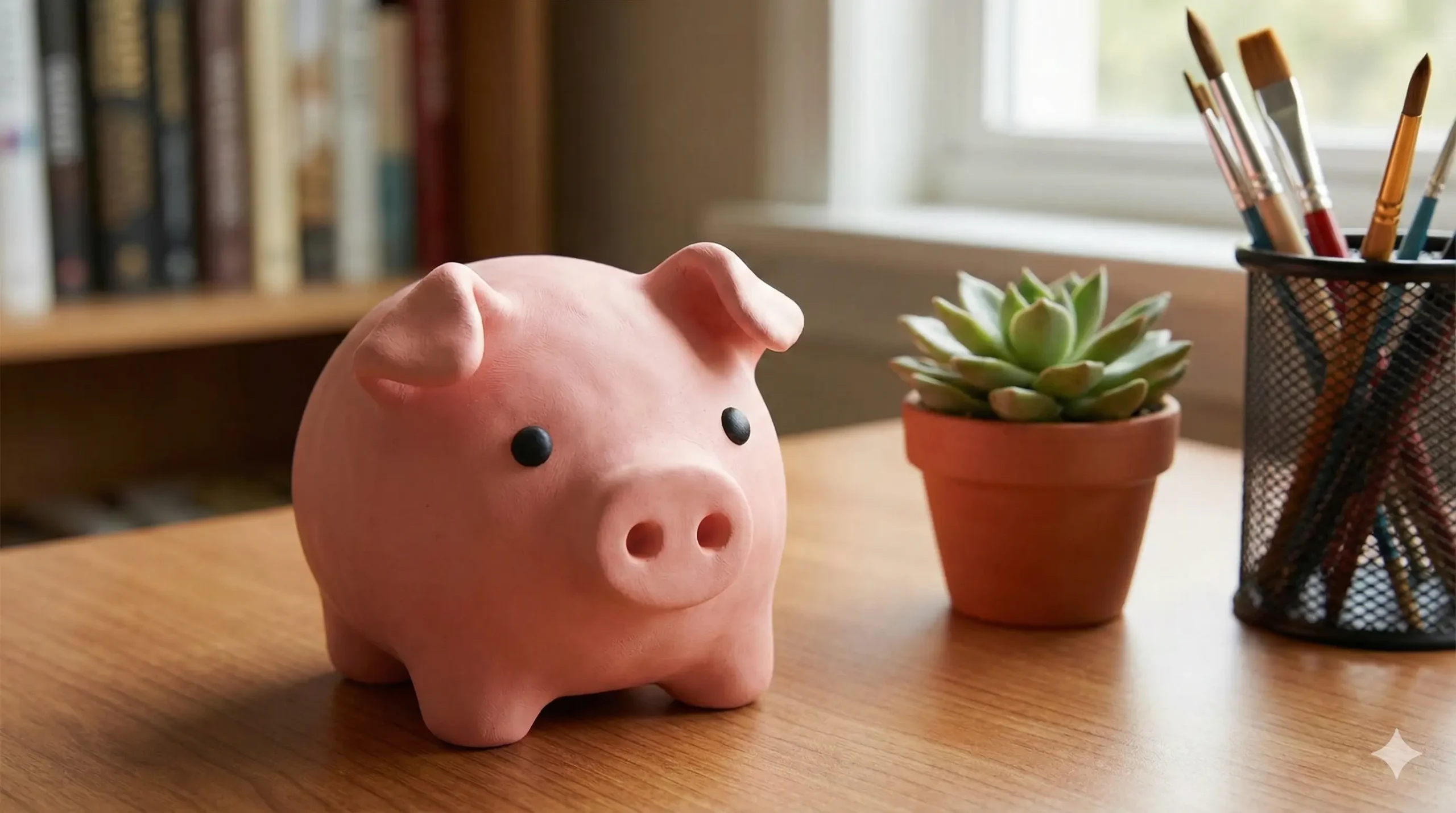
The Ultimate Guide to Making an Adorable Clay Pig: A Beginner’s Craft Tutorial

If you are looking for a project that brings a smile to your face and a pop of color to your desk, you have arrived at the right place. Clay modeling is one of the most therapeutic and rewarding hobbies you can pick up, and this Adorable Clay Pig Craft is the perfect entry point for beginners.

Whether you are an adult looking for a relaxing creative outlet or a parent seeking a hands-on activity for your children, this tutorial will guide you through every roll, pinch, and press.

Why We Love Pigs (And Why You Should Craft One!)

Before we get our hands messy, let’s talk about our subject. Have you ever heard someone say they are “sweating like a pig”? It is a common phrase that implies pigs sweat profusely. However, biology tells us the exact opposite! Pigs actually possess very few functional sweat glands.

That is why you often see them rolling in mud puddles. They aren’t just being messy; they are being smart! The mud cools them down and acts as a sunscreen to protect their skin. While we aren’t sure if pigs are offended by the idiom, we do know they are incredibly intelligent, social, and cute creatures.

With National Pig Day celebrated on the 1st of March, there is no better time to pay homage to these barnyard friends. But honestly? This craft is perfect for any day of the year.

Choosing Your Clay: A Quick Guide for Beginners

To get the best results, you need to choose the right material. Since this tutorial is for beginners, here are the two best options:

  1. Air-Dry Clay: This is the most accessible option. It feels like dough, is easy to manipulate, and dries hard within 24-48 hours sitting at room temperature. It is kid-friendly and requires no oven.
  2. Polymer Clay: If you want a more durable, professional finish, polymer clay is fantastic. It comes in vibrant colors and won’t dry out while you work. However, it requires baking in a home oven to set.
  3. Homemade Playdough: For a temporary, fun activity with toddlers, you can use homemade salt dough or store-bought playdough.

Note: The instructions below apply to all three types

Supplies You Will Need

You don’t need a professional studio to make this pig. You likely have most of these tools at home.

  • Clay: You will need two shades of pink.
    • Light Pink: For the head, body, ears, and legs.
    • Dark Pink: For the snout and inner ears.
    • Black & White (Optional): For the eyes, though you can use markers or beads.
  • A Toothpick or Clay Tool: For detailing the nostrils and texturing.
  • A Clean Surface: A silicone mat, parchment paper, or a smooth placemat prevents sticking.
  • Glue: White school glue (PVA) is helpful if using air-dry clay to help parts stick together.
  • Clear Varnish (Optional): To make your piggy shine after it dries.

Step-by-Step Tutorial: How to Make a Clay Pig

Ready to start? Wash your hands, clear your table, and let’s get sculpting!

Step 1: Prepare Your Clay Palette

Modeling starts with preparation.

  • Take your Light Pink and Dark Pink clay.
  • Condition the clay: This means kneading it in your hands for a minute or two. The heat from your hands warms the clay, making it pliable, smooth, and less likely to crack.
  • Divide your light pink clay. You will need one large chunk for the body/head, and four smaller pea-sized pieces for the limbs.

Step 2: Form the Head and Body

For this “Chibi” style cute pig, we are going to combine the head and body into one round, adorable shape.

  • Take your large chunk of Light Pink clay.
  • Roll it between your palms in a circular motion. Apply even pressure.
  • Keep rolling until you have a smooth sphere. If you see cracks, dip your finger in a tiny bit of water (for air-dry clay) or baby oil (for polymer clay) and smooth them out.
  • Optional: If you want a separate head and body, roll two balls—one slightly larger than the other—and stack them. But for this tutorial, a single round blob is often cuter!

Step 3: Create the Snout

The snout is the most defining feature of a pig.

  • Take a small piece of Dark Pink clay.
  • Roll it into a small ball, then gently flatten it between your thumb and finger to create an oval or disk shape.
  • Place this oval onto the center of your light pink body.
  • The Detail: Take your toothpick or a small dotting tool. Press two small holes into the dark pink oval to create the nostrils. Pro Tip: Don’t poke straight down; wiggle the tool slightly to widen the nostrils.

Step 4: The Ears

Ears give your pig its expression.

  • Take two small balls of Light Pink clay. Shape them into triangles.
  • Take two even smaller balls of Dark Pink clay. Flatten them and press them onto the center of the light pink triangles.
  • Attach: Press the ears onto the top of the head.
  • The Flop: To make the pig look extra cute, fold the tip of one (or both) ears downward slightly. It gives the pig a relaxed, friendly look.

Step 5: The Limbs

Pigs have short, sturdy legs.

  • Roll four small spheres of Light Pink clay.
  • Shape them slightly into cylinders or “stumps.”
  • Attach: Press these onto the bottom of the body. You want the pig to sit stably on these legs.
  • Detailing: Use your toothpick to press a small line into the front of each foot to mimic the hooves (cloven trotters).

Step 6: The Curly Tail (Crucial Step!)

You cannot have a pig without a curly tail!

  • Take a tiny piece of Light Pink clay.
  • Roll it into a very thin “snake” or worm shape on the table.
  • Coil it around the tip of your toothpick to get that perfect spring shape.
  • Gently slide it off the toothpick and attach it to the back of the pig.

Step 7: The Eyes

Now, let’s bring it to life.

  • Option A (Clay): Roll two tiny balls of white clay and flatten them on the face. Add two microscopic dots of black clay on top.
  • Option B (Googly Eyes): Press small googly eyes into the clay while it is soft.
  • Option C (Paint): If you are nervous about working with tiny clay pieces, wait for the pig to dry completely and paint the eyes on with a black marker or acrylic paint.

5 Expert Tips for Working with Clay

If this is your first time, you might encounter a few hiccups. Here is how to solve them:

  1. Cracking Clay: If your air-dry clay starts cracking while you work, it is getting too dry. Keep a small bowl of water nearby and wet your fingers to smooth the cracks.
  2. Sticking Parts: If the ears or legs keep falling off, you need to “score and slip.” Scratch the surface of the body and the ear with a toothpick (score), add a tiny dab of water/glue (slip), and then press them together. This creates a bond like a zipper.
  3. Fingerprints: To remove fingerprints from your finished piece, lightly brush it with a wet paintbrush (for water-based clay) or a little baby oil (for oil-based clay) before drying.
  4. Drying Time: Be patient! If you are using air-dry clay, let it sit for at least 24 hours. Turning it over halfway through helps the bottom dry evenly.
  5. Sealing: Once your pig is dry (and painted, if you chose to paint it), coat it with a layer of Mod Podge or clear nail polish. This protects it from moisture and gives it a ceramic-like shine.

Educational Bonus: Fun Pig Facts for Kids

If you are doing this craft with children, keep them entertained with these facts while their hands are busy:

  • Super Smart: Pigs are considered the fourth most intelligent animal (after chimps, dolphins, and elephants). They are smarter than dogs!
  • Clean Freaks: Despite the “dirty pig” reputation, pigs are actually very clean animals. They keep their toilet area far away from where they eat and sleep.
  • Great Swimmers: In the Bahamas, there is an island called “Pig Beach” where feral pigs swim in the ocean to greet tourists!

Conclusion

And there you have it! You have successfully transformed a few lumps of clay into a charming, desk-worthy companion. This Clay Pig Craft is more than just a decoration; it is a testament to the fact that you can create something beautiful with your own two hands.

Leave a Reply

Your email address will not be published. Required fields are marked *